Losing one or more teeth is a common experience for older adults, and it can affect eating, speaking, and confidence. Dental implants for seniors have become a widely used solution because they replace both the tooth and its root, offering a stable and long-lasting alternative to dentures or bridges. This guide explains how dental implants work, who is a good candidate, what the process involves, and what seniors in Fresno can expect from treatment.
Caliber Dental Care works with patients throughout Fresno to evaluate whether implants are a suitable option based on individual oral health, bone density, and overall medical history. This article is intended to help seniors and their families understand the basics before deciding on the right path forward.
Why Tooth Loss Is Common Among Seniors
Tooth loss in older adults is usually the result of a combination of factors that build up over decades. Common causes include:
Long-term gum disease that weakens the bone and tissue supporting the teeth
Untreated tooth decay
Wear and damage from years of chewing and grinding
Certain medications that reduce saliva flow and increase decay risk
Previous dental work, such as old fillings or crowns, that eventually fails
According to the Centers for Disease Control and Prevention, a significant percentage of adults aged 65 and older have lost several or all of their natural teeth. This makes restorative options like implants relevant to a large portion of the senior population, not just a small group of patients.
What Are Dental Implants
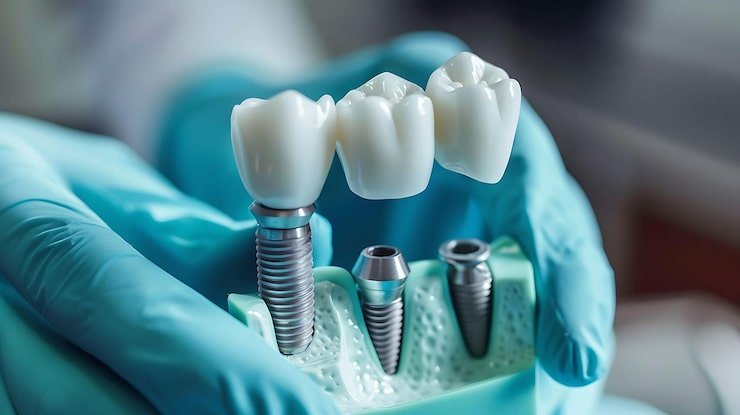
A dental implant is a small titanium post that is placed into the jawbone to act as an artificial tooth root. Once the bone heals around the implant, a connector piece called an abutment is attached, followed by a custom crown that matches the surrounding teeth. Unlike removable dentures, an implant is fixed in place and functions similarly to a natural tooth.
For patients who are missing all or most of their teeth, full mouth dental implants for seniors offer a way to replace an entire arch of teeth using a set number of implant posts rather than individual implants for every missing tooth. This approach can reduce treatment time and cost compared to replacing each tooth separately.
Are Seniors Good Candidates for Dental Implants
Age by itself is not a barrier to getting dental implants. Many people in their seventies, eighties, and beyond receive implants successfully. What matters more is the condition of the jawbone and the patient’s general health. A dentist will typically evaluate the following before recommending treatment:
Bone density in the jaw, since implants need enough bone to anchor securely
Gum health, as active gum disease needs to be treated first
Chronic conditions such as diabetes or osteoporosis, which can affect healing
Medications, including blood thinners or bisphosphonates, which may influence the treatment plan
Smoking history, since tobacco use can slow healing and reduce implant success rates
If bone density is too low, a bone graft may be recommended before implant placement. This adds time to the process but can still result in a successful outcome for many patients.
The Dental Implant Process Step by Step
The implant process generally takes place over several months, though the exact timeline depends on the patient’s oral health and how many teeth are being replaced.
Initial Consultation and Evaluation
The first step involves a full examination, including X-rays or a CT scan, to assess bone structure and plan implant placement. This is also when the dentist discusses medical history and any medications that could affect treatment.
Implant Placement Surgery
The implant post is surgically placed into the jawbone. This is typically done under local anesthesia, and most patients report only mild discomfort afterward that can be managed with over-the-counter pain relief.
Healing and Osseointegration
Over the following weeks to months, the bone gradually fuses to the implant surface in a process called osseointegration. This step is what gives the implant its long-term stability, and it usually takes between three and six months.
Abutment and Crown Placement
Once healing is complete, an abutment is attached to the implant, and a custom crown is fitted on top. The crown is designed to match the color and shape of nearby teeth.
For patients replacing a single tooth, more detail on this stage of treatment is available through Caliber Dental Care’s single tooth implant page, which outlines what to expect for one-tooth replacements specifically.
Types of Implant Solutions for Seniors
Different patients require different approaches depending on how many teeth are missing and the condition of the jawbone.
Treatment Option | Best Suited For | General Timeline |
|---|---|---|
Single tooth implant | Replacing one missing tooth | 3 to 6 months |
Multiple implant crowns | Replacing several teeth in different areas | 4 to 8 months |
Implant supported bridge | Replacing a row of adjacent missing teeth | 4 to 8 months |
Full mouth dental implants for seniors | Replacing all teeth in one or both arches | 6 to 12 months |
The right option depends on an individual assessment, and a dentist can recommend the most appropriate treatment after reviewing X-rays and discussing the patient’s goals.
Benefits of Dental Implants for Older Adults
Implants offer several practical advantages that make them appealing for seniors, particularly compared to traditional dentures:
They allow for more comfortable chewing, since implants are anchored in the bone rather than resting on the gums
They help preserve jawbone density, which can otherwise deteriorate after tooth loss
They do not require adhesives or nightly removal, unlike removable dentures
They support clearer speech, since there is no risk of the appliance shifting
They are designed to last many years with proper care and regular dental visits
Common Concerns Seniors Have About Implants
Is the Surgery Safe for Older Patients
Implant surgery is a routine procedure performed under local anesthesia, and age alone does not typically increase surgical risk. A dentist will review overall health history to confirm the patient is a safe candidate before proceeding.
What if There Isn’t Enough Bone
Bone loss is common after years without a tooth in place. In these cases, a bone graft can rebuild enough structure to support an implant, though it may extend the treatment timeline by a few months.
How Long Do Implants Last
With proper oral hygiene and regular checkups, implants can last for decades. The crown portion may eventually need replacement due to normal wear, but the implant post itself is designed for long-term use.
Finding Dental Implants in Fresno
Patients searching for dental implants in Fresno often want to understand local treatment options, costs, and what a nearby practice can offer before committing to a consultation. An implant dentist in Fresno can evaluate bone health, walk through financing options, and explain realistic timelines based on the individual case.
For those looking for affordable dental implants in Fresno CA, it is worth asking about payment plans, insurance coverage, and whether the practice offers phased treatment to spread out costs over time. A general dentist in Fresno may also be able to refer patients to a specialist if more complex bone grafting or full mouth reconstruction is needed.
In addition to dental implants, many patients also seek Dental Fillings to restore teeth affected by cavities, minor cracks, or wear. Dental Fillings help preserve the natural tooth structure, prevent further decay, and improve overall oral health. During a consultation, a dentist can determine whether a filling, dental implant, or another restorative treatment is the most appropriate solution based on the patient’s needs.
Caring for Dental Implants
Implants require the same basic care as natural teeth, along with a few added considerations:
Brush at least twice daily, paying attention to the area around the implant crown
Floss daily, using implant-specific floss or interdental brushes if recommended
Attend regular dental checkups so the implant and surrounding gum tissue can be monitored
Avoid chewing on very hard items like ice, which can damage the crown
Report any looseness, swelling, or discomfort to a dentist promptly
Final Thoughts
Dental implants for seniors offer a durable and functional way to restore missing teeth, whether replacing a single tooth or an entire arch. The process requires some time for healing and bone integration, but the long-term benefits of improved chewing, speech, and jawbone health make it a worthwhile option for many older adults.
If you are exploring dental implants in Fresno and want to understand which option fits your situation, Caliber Dental Care can walk you through a personalized evaluation. Book an appointment to discuss your options with the team.
Frequently Asked Questions
Can seniors with osteoporosis get dental implants?
Many patients with osteoporosis can still receive implants, though certain medications used to treat the condition may require additional evaluation. A dentist will review medical history to determine the safest approach.
How much do full mouth dental implants for seniors typically cost?
Most patients describe the discomfort as mild to moderate, similar to a tooth extraction, and it is typically managed with standard pain relief medication during the healing period.
How long does a deep cleaning take to complete?
Cost varies based on the number of implants needed, whether bone grafting is required, and the type of restoration used. A consultation is the best way to get an accurate estimate for an individual case.
Is there an age limit for getting dental implants?
Implants are cared for much like natural teeth, with regular brushing, flossing, and dental visits. No special daily products are required unless a dentist recommends them.
Does dental insurance cover deep cleaning?
There is no strict upper age limit. Candidacy depends more on bone health, gum condition, and overall medical fitness than on age alone.