How long do dental implants last? The implant post itself can last decades, and often a lifetime. This article explains how long each part lasts, what makes implants fail early, and whether getting one hurts.
The answer depends on two things: which part of the implant you mean, and how you take care of it.
The Three Parts of a Dental Implant
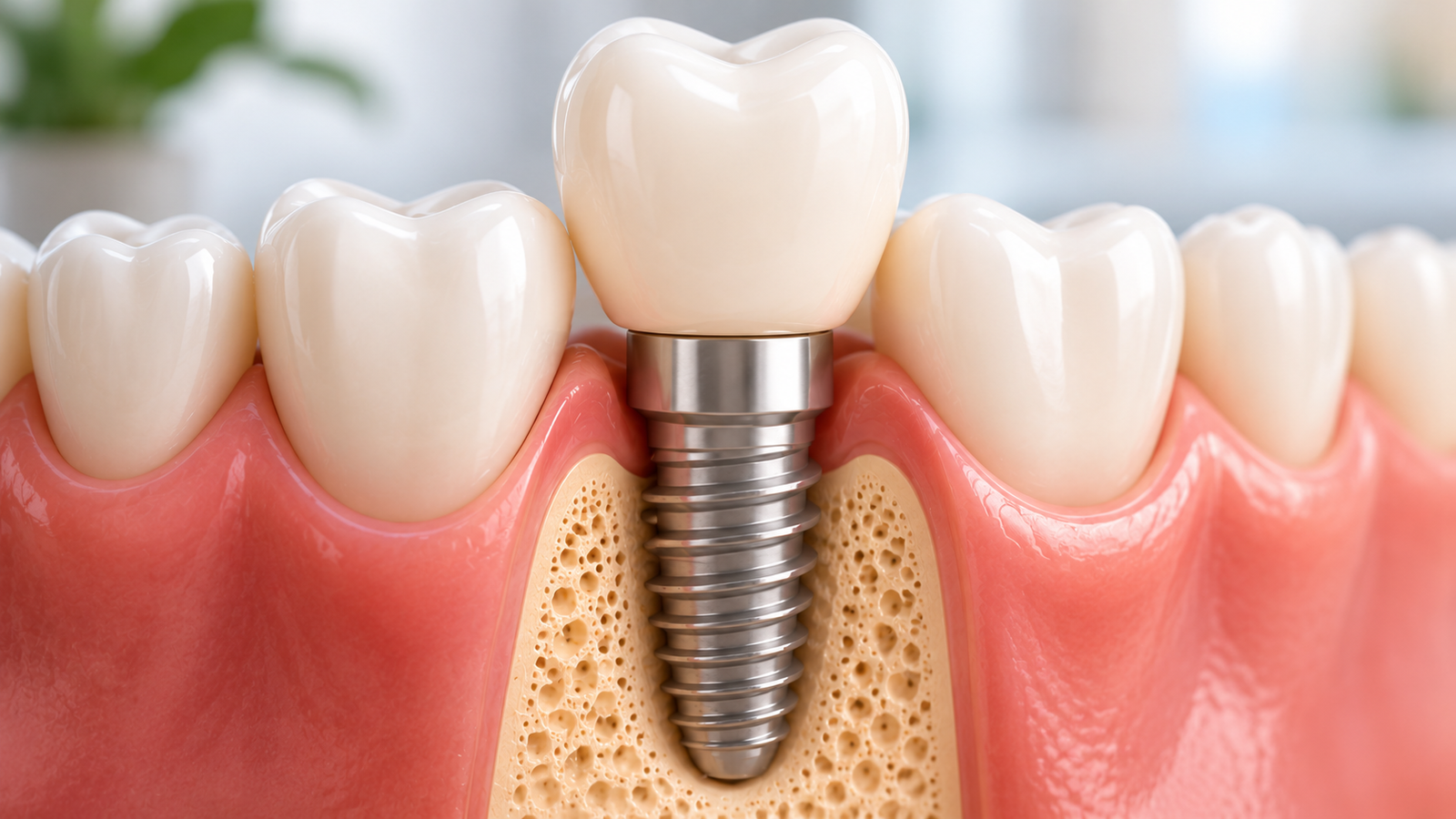
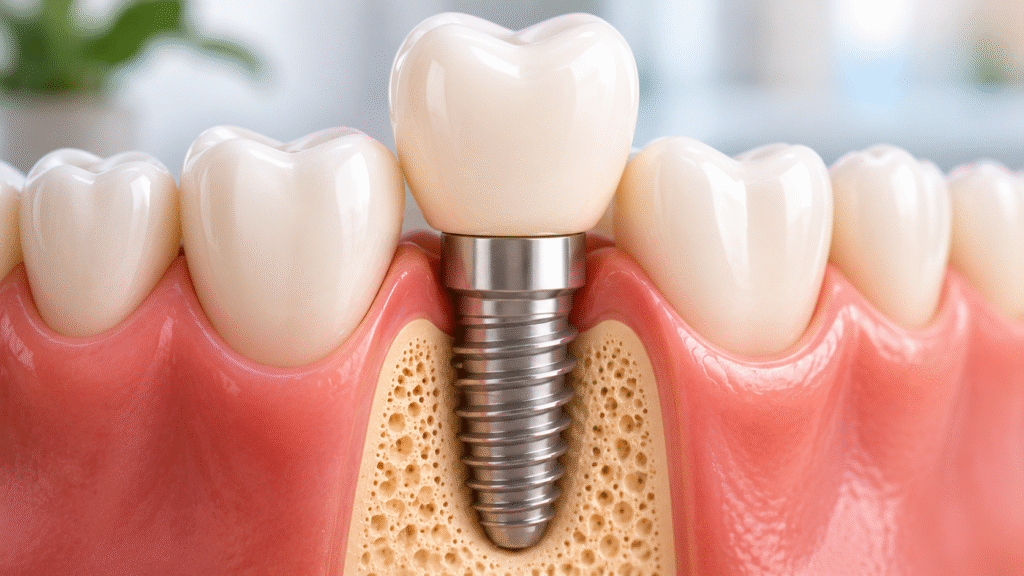
A dental implant isn’t one piece. It has three parts, and they don’t all last the same amount of time.
- The post: a small titanium screw that sits in your jawbone and works like a tooth root
- The abutment: a small connector that sits on top of the post
- The crown: the part you see and chew with
How Long Do Dental Implants Last, Part by Part?
The Post: Often a Lifetime
Once your bone has healed around the post, it becomes part of your jaw. With good care, it can stay in place for decades.
The post can’t get cavities. What it can get is gum and bone problems around it, and that’s what usually ends an implant early.
The Crown: Usually 10–15 Years
The crown takes all the wear from chewing. Over time it can chip, crack, or wear down.
Most crowns last around 10–15 years before they need replacing. Replacing a crown is a much smaller job than replacing the implant. The post stays where it is.
What Makes Dental Implants Fail Early?
Most implants that fail do it for a reason. These are the common ones:
- Gum infection around the implant. Plaque builds up, the gums get inflamed, and the bone holding the post starts to break down.
- Smoking. It slows healing and makes infections around the implant more likely.
- Grinding or clenching. Constant pressure at night can loosen or crack the crown.
- Diabetes that isn’t well controlled. It can slow healing and make gum problems worse.
- Skipping cleanings. Early problems around an implant are easy to miss at home.
Already had gum disease? Get it treated before the implant goes in. Gum disease treatment gives the implant a healthy base to start from.
How to Make Your Dental Implant Last Longer
You don’t need special products. Treat the implant the way you’d treat a natural tooth, and stay a bit more consistent.
- Brush twice a day, including along the gumline around the implant
- Floss or use a water flosser every day
- Don’t chew ice, hard candy, or pen caps
- Wear a night guard if you grind your teeth
- Quit smoking, or at least cut back
- Come in for regular checkups and cleanings
At checkups, we look at the gums around the implant and check the bone on X-rays. That’s how small problems get caught before they cost you the implant.
Do Dental Implants Hurt?
It’s one of the first things people ask. For most patients, the answer is less than they expect.
During the Procedure
The area is fully numbed before we start. You’ll feel pressure, but you shouldn’t feel sharp pain.
After the Procedure
You can expect soreness and some swelling. It’s usually worst in the first 2–3 days, then gets better.
- Over-the-counter pain relievers handle it for most people
- A cold pack on your cheek helps with swelling
- Soft foods for the first few days make eating easier
Many patients say it felt easier than having the tooth pulled. If pain is getting worse after a few days instead of better, call the office.
For more recovery tips, read how to prevent dental implant side effects.
Implants for Teeth vs. Bridges and Dentures: Which Lasts Longer?
If you’re comparing options, this is how they usually stack up:
| Option | Typical lifespan |
|---|---|
| Dental implant post | Decades, often a lifetime |
| Implant crown | 10–15 years |
| Bridge | 5–15 years |
| Dentures | 5–10 years |
A bridge relies on the teeth next to the gap. If one of those teeth gets decay, the whole bridge can be in trouble.
Dentures sit on your gums, and the bone underneath slowly shrinks. That’s why they loosen and need refitting over time. An implant replaces the root, which helps keep that bone in place.
When Should You Call About an Implant?
Get it checked if you notice:
- Bleeding or swollen gums around the implant
- A crown that feels loose or wobbles
- Pain when you bite down
- A bad taste or pus near the implant
- Gums pulling back and showing metal
Caught early, many of these problems can be fixed without losing the implant.
Getting Dental Implants in Fresno
At Caliber Dental Care, Dr. Gurneetpal Singh uses digital X-rays and 3D imaging to plan each implant. That planning helps it last.
- Insurance: We accept most major PPO dental plans and help with claims.
- No insurance? We offer financing and in-house membership plans.
- Single implant consult: Ask about our free consult when you call.
We’re at 432 W Shaw Ave, Fresno, CA 93704.
Quick Answers
Can a dental implant last forever? The post often lasts a lifetime. The crown on top will likely need replacing at some point.
Can I get a cavity in an implant? No. But the gums and bone around it can still get infected, so brushing and flossing still matter.
Do implants last as long in older adults? Age alone usually isn’t the issue. Bone health, gum health, and conditions like diabetes matter more.
Does getting an implant hurt more than pulling a tooth? Most people find the soreness about the same or milder, and it usually fades within a few days.
Conclusion
The post usually lasts decades, often a lifetime, while the crown on top usually lasts 10–15 years. Gum infection, smoking, grinding, and skipped cleanings are what shorten an implant’s life. Getting an implant is less painful than most people expect, with soreness that usually fades in a few days.
Thinking about an implant? Call Caliber Dental Care at (559) 226-7021 to book a consultation. Have a question? Leave it in the comments, or explore our services to see what else we offer. For more visit here.